Case Study: Patient Fall in Nursing Home
As part of our Case Study series, we will now look at something that unfortunately occurs too often to our loved ones who live in nursing homes – patient falls.
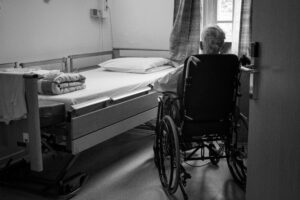
Patient Falls in Nursing Homes: Why They Are Often Negligent
Falls are one of the most common and most dangerous events in nursing homes. For elderly and medically fragile residents, a single fall can result in catastrophic injuries—hip fractures, head trauma, brain bleeds, permanent loss of mobility, or death.
While nursing homes often describe patient falls as “unavoidable,” the reality is that many falls are predictable and preventable. When a facility fails to take reasonable steps to protect a resident from a known risk, a fall is not an accident—it is negligence.
Nursing Homes Know Falls Are a Serious Risk:
Michigan nursing homes are required to assess each resident for fall risk at admission and on an ongoing basis. Common risk factors include:
-
Weakness or impaired balance
-
Recent illness or hospitalization
-
Cognitive impairment or dementia
-
Medications that cause dizziness or sedation
-
Prior history of falls
When a resident is identified as high risk, the facility has a duty to implement specific protective measures tailored to that individual.
Preventable Measures Nursing Homes Are Required to Use:
Reasonable fall-prevention measures commonly include:
-
Adequate staff supervision
-
Assistance with transfers and ambulation
-
Bed and chair alarms
-
Proper footwear and mobility aids
-
Environmental safety (lighting, uncluttered walkways)
-
Timely response to call lights
-
Ongoing reassessment as conditions change
These are basic components of nursing care—not optional conveniences.
Why Falls Are Often Negligence Under Michigan Law:
A fall becomes negligence when it occurs because a nursing home failed to:
-
Follow the resident’s care plan
-
Provide adequate staffing and supervision
-
Use ordered or appropriate safety devices
-
Monitor changes in condition
-
Respond promptly to known risks
Michigan law does not excuse neglect because a resident is elderly, frail, or confused. In fact, those vulnerabilities increase the duty of care owed.
Disabling alarms, ignoring call lights, failing to assist residents to the bathroom, or leaving high-risk residents unattended are not judgment calls—they are departures from accepted nursing standards.
Delayed Response After a Fall is Also Negligence:
Negligence does not end when a fall occurs. Facilities must respond appropriately, including:
-
Immediate assessment for injury
-
Neurological monitoring if head impact is possible
-
Prompt physician notification
-
Timely hospital transfer when indicated
-
Family notification
Delays in recognizing head injuries or fractures can turn a survivable injury into a fatal one.
Real World Example:
An 82-year-old Michigan resident was admitted to a licensed nursing home following hospitalization for pneumonia. At admission, the facility assessed her as a high fall risk due to weakness, balance problems, and recent illness. Her written care plan required staff assistance for transfers, use of a bed alarm, and close monitoring.
Under Michigan law, nursing homes must provide residents with care consistent with accepted standards and must take reasonable steps to prevent avoidable injuries, including falls.
Despite these obligations, the facility was chronically understaffed. Nursing assistants routinely covered more residents than allowed under internal policies. Staff disabled the resident’s bed alarm because it was “disruptive” during overnight hours.
One night, the resident attempted to walk to the bathroom without assistance. She fell, striking her head and hip on the floor. The fall was unwitnessed.
Rather than arranging immediate medical evaluation—as required when a head injury is possible—staff documented the fall and returned the resident to bed. No neurological checks were performed. No physician was notified. No family member was contacted.
Over the next 24 hours, the resident became increasingly confused and lethargic. When family visited the following day, they demanded emergency transfer. At the hospital, imaging revealed a subdural hematoma (a brain bleed) and a hip fracture, both requiring surgery.
The resident never regained her prior level of independence. She suffered complications, including infection, immobility, and cognitive decline, and died several months later.
Violations of the Standard of Care:
This case involved violations of multiple Michigan duties and regulations, including:
-
Failure to provide adequate nursing supervision
-
Failure to implement and follow an individualized care plan
-
Failure to prevent foreseeable and avoidable falls
-
Failure to timely recognize and respond to head injury
-
Failure to promptly notify a physician and family
-
Failure to transfer the resident for emergency medical care
Michigan law does not allow facilities to excuse these failures based on age, frailty, or staffing shortages.
Why this is negligence under Michigan Law:
Michigan recognizes that nursing home residents are medically vulnerable and dependent on staff for safety. When a facility identifies a risk—such as fall risk—it has a legal duty to act on that knowledge.
Disabling safety devices, ignoring care plans, and delaying hospital transfer after a head injury are not judgment calls. They are deviations
from the standard of care.
In Michigan, these cases are often pursued as:
-
Ordinary negligence claims
-
Or both, depending on the facts
Each path has specific procedural requirements and deadlines, making early legal evaluation critical.
The Broader Impact:
Cases like this are not isolated. They reflect systemic failures driven by understaffing, poor training, and cost-cutting—often by corporate owners far removed from the bedside.
Accordingly, holding facilities accountable not only provides justice for families, but also helps protect other Michigan residents from preventable harm.
How Hoffer & Sheremet, PLC Can Help You and Your Family
-
Immediate case evaluation – We review your medical records and timeline at no cost.
-
Access to top medical experts – Including physicians, neurologists, nurses, and damages experts.
-
Aggressive litigation – We prepare every case as if it will go to trial.
-
Personalized representation – We know every client and case inside and out.
If your loved one suffered a fall at their nursing home, please contact Hoffer & Sheremet, PLC today for your free case review.